What a Boba Cart Actually Costs to Start in 2026
Every week someone asks me whether boba works from a cart. The answer is yes — boba might be the best cart drink there is. Average cup sells for $6, the equipment list is short, and the whole operation fits in a footprint smaller than most coffee carts. But the startup cost questions I get are alway
Jimmy On
Every week someone asks me whether boba works from a cart. The answer is yes — boba might be the best cart drink there is. Average cup sells for $6, the equipment list is short, and the whole operation fits in a footprint smaller than most coffee carts. But the startup cost questions I get are always wrong in the same direction: people either think they can start for $500 with a folding table, or they assume they need $50,000 like a shop. The real number is in between, and it's very knowable.
Here's the honest line-item budget for a legitimate mobile boba cart in 2026.
The cart itself
Budget line items:
Mobile cart or trailer with sinks and power, used or basic new: $2,200–$8,000
Cup sealing machine: $300–$600
Commercial blender (for smoothies/frappes): $300–$500
Undercounter refrigerator: $600–$1,200
Tapioca pearl cooker: $150–$300
Tea brewer or batch brewers: $100–$250
Water filtration + food-grade water tanks: $200–$400
Smallwares (shakers, pitchers, portioning tools, storage): $200–$400
That's the equipment core. The cart is the big variable — a basic equipped cart starts around $2,200, and a nicer custom build with proper sinks, NSF surfaces, and onboard power runs toward $8,000. Buy the cart with your health permit in mind: most counties want a three-compartment sink or approved alternative, hot and cold running water, and food-safe surfaces. A cheap cart that fails inspection is the most expensive cart.
The paperwork and the soft costs
Budget line items:
Business license, health permit, seller's permit: $200–$2,000 (varies hard by county)
Liability insurance (first year): $400–$800
Initial ingredient and packaging inventory: $500–$1,500
Branding (menu boards, signage, cups with your logo): $300–$800
Working capital buffer (first 2 months of market fees and restocks): $1,000–$2,000
Add it up and the realistic all-in number for a proper mobile boba cart is $8,000 to $15,000. Compare that to a brick-and-mortar boba shop, which runs $20,000 to $50,000 before you sell a single cup, and the cart starts looking like the smartest entry point in the whole beverage business. You're skipping rent, build-out, and most of the permit nightmare.
The margin math that pays it back
A standard boba build — tea, milk or creamer, sweetener, tapioca pearls, sealed cup — costs roughly $1.20 to $1.80 per cup in ingredients and packaging. Sell at $6. That's about $4.50 gross per cup, a 75% margin.
At 80 cups per market day (a realistic number for a busy Saturday), that's $360 in gross profit per day. Do two market days a week and you're grossing around $2,880 a month against fixed costs of maybe $600–900 (market fees, insurance amortization, restocks). The cart pays for itself in 3 to 6 months at that pace. Private events pay it back faster — a 100-guest boba bar at $7 a head is $700 for a few hours of work.
The three things that actually determine whether you make it
1. Tapioca freshness is the entire business. Pearls have a 4-to-6-hour window where they're perfect — chewy, warm, glossy. After that they go hard and sad. The carts that fail are the ones cooking one giant batch in the morning and serving it all day. Cook smaller batches every 2 hours. Put "fresh pearls every 2 hours" on your sign. It's true, and it's a differentiator.
2. Five drinks, not twenty. Menu engineering matters more for boba than almost any other cart drink because toppings multiply your inventory. Run five core drinks — classic milk tea, brown sugar boba, taro, Thai tea, one fruit tea — and one topping station (pearls, jelly, popping boba). Every drink you add costs you inventory, training time, and speed. Speed is money at a market.
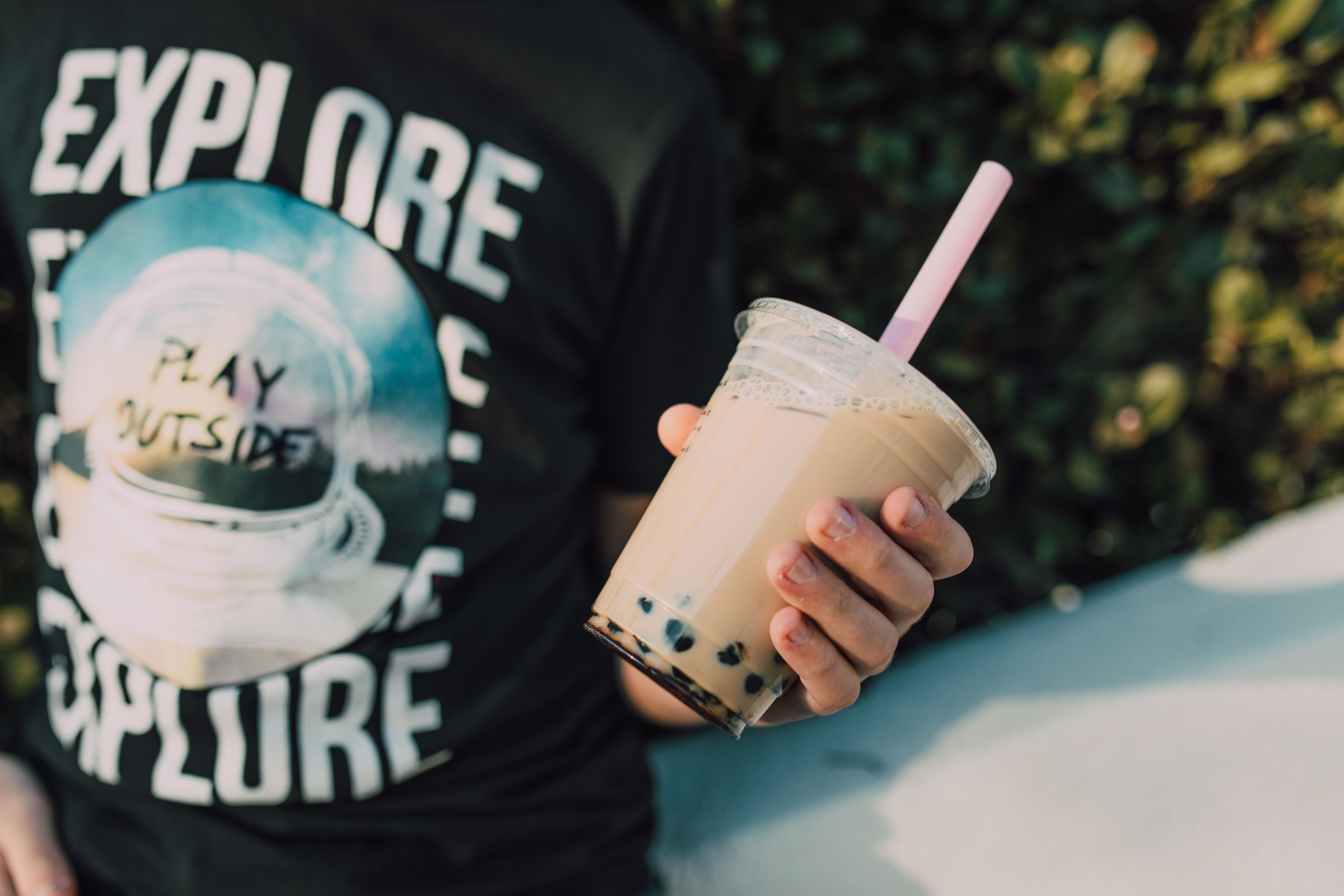
3. The sealer is your billboard. That sealed cup with the film top is the most distinctive packaging in mobile beverages. Get custom-printed sealing film with your logo — it costs a little more per roll and it's worth every cent, because every cup becomes a branded object people carry around the event. Nobody photographs a paper coffee cup. Everybody photographs a sealed boba cup.
Boba from a cart isn't a compromise version of a boba shop. For events and markets, it's the better format — lower cost, higher margin per cup, and a product that markets itself. If you're starting a beverage cart in 2026 and you're not sure which drink to build around, run the numbers on boba first.